Category Archives: Product Managment
Identity Is No Longer a Login Problem. It’s an Infrastructure Problem
For decades, enterprise identity was all about one simple question: “Who are you, and can we let you log in?” Fast forward to today, and that model is rapidly becoming obsolete. Modern enterprises are no longer just made up of employees logging into applications; they are complex ecosystems of humans, applications, APIs, service accounts, workloads, and AI agents.
Identity has fundamentally outgrown the front door. It is no longer just an authentication service it is evolving into an enterprise control plane and a critical infrastructure layer.

The Catalyst: Agentic AI and Non-Human Identities (NHIs)
The most significant driver of this transformation is the rise of agentic AI. Unlike traditional software that follows predetermined instructions, AI agents can receive a goal, reason about it, select tools, call APIs, and execute actions on our behalf. According to Okta’s 2026 Businesses at Work research, 91% of organizations are already using AI agents, yet only 10% have a well-developed strategy for managing them.
This creates a massive governance challenge. When an AI agent executes a transaction across a SaaS application, a database, and a downstream payment system, who is ultimately responsible? Traditional Identity and Access Management (IAM) struggles here because it often compresses multiple actors into a single credential. The future of identity must preserve the entire chain of authority—from the human sponsor to the agent, the delegated tools, and the final action.
From Directory to Identity Graph
To manage this complexity, identity architecture is shifting from a static directory (User → Groups → Applications) to a dynamic Identity Graph. This graph maps the complex relationships connecting human identities, machine identities, AI agents, delegated permissions, APIs, and data.
Non-Human Identities (NHIs) such as API keys, service accounts, and automated pipelines—are scaling rapidly, often dwarfing human users. An enterprise identity fabric must treat these NHIs as first-class citizens with strict lifecycles, clear ownership, and defined time boundaries. Every production agent should have a verifiable identity, an accountable human owner, a clear purpose, and a controlled retirement process.
Authorization Over Authentication
While authentication proves who the actor is, authorization determines what they are allowed to do. In an agentic enterprise, authorization must be dynamic, contextual, and time-bound.
Privileged Access Management (PAM) is also moving into the autonomous era. AI agents should operate on Zero Standing Privilege (ZSP)—requesting Just-In-Time (JIT) and least-privilege access only when needed, and immediately losing that privilege when the task is complete. Identity infrastructure must evolve to evaluate real-time trust, analyzing behavioral baselines and context before granting access.
The New Identity Security Fabric
As protocols like Model Context Protocol (MCP) and Agent-to-Agent (A2A) communication become standard, delegation must be explicit and verifiable across organizational boundaries. Identity determines who can access data, and data context determines what an identity should be allowed to access.
To prepare for this shift, organizations must:
- Build a comprehensive identity inventory covering every human, machine, workload, and AI agent.
- Give every AI agent a first-class identity with explicit human accountability and sponsorship.
- Move toward dynamic, risk-based authorization rather than relying solely on static Role-Based Access Control (RBAC).
- Create an agent activity ledger to track the entire trajectory of an automated action for compliance, forensics, and accountability.
Conclusion: Trustworthy Autonomy
Identity is no longer just answering “Can you log in?” It is now answering, “Can this actor perform this action, on this resource, under this context, with this authority and can we prove why?”
The winning enterprise architectures will treat identity as the operating system for digital trust a unified security fabric that makes the autonomous enterprise possible, observable, and deeply secure.
Important Takeaways for the Modern architecture:
- Identity is becoming a control plane, not simply an authentication layer.
- AI agents are creating a new category of first-class non-human identities.
- Authorization is becoming more important than authentication.
- PAM must evolve toward Zero Standing Privilege for autonomous actors.
- Identity governance must move from periodic review to continuous, automated enforcement.
- Identity graphs will increasingly replace isolated directories as the foundation for understanding digital relationships and authority.
- Agent identity must preserve the chain of accountability from human sponsor → agent → delegation → tool → resource → action.
- Identity, data, behavioral analytics, PAM and AI security are converging.
- The winning enterprise identity architecture will be a unified Identity Security Fabric spanning humans, machines, workloads and AI agents.
- The ultimate goal is not merely secure access. It is trustworthy autonomy.
Share this:

Why Your Product Organization Is Stalling (and the 3Ps to Fix It)

As organizations scale, a frustrating paradox often emerges: the more people you hire and the more “Agile ceremonies” you implement, the slower you seem to deliver. Innovation begins to stall, and the overhead of coordination outweighs the output of the teams. This is the “Scaling Trap”a state where increased complexity leads to organizational friction, high “Process Waste,” and a fatal disconnect from customer value.
To break this cycle, product leaders must look beyond individual features or meeting schedules and focus on the organizational system as a whole. The 3P Framework (Product, People, and Process) is the antidote to this friction. However, these pillars are not silos; they are an interdependent system.
If you optimize them independently, you fail.
- Focus on Technology alone: You build elegant solutions that nobody needs.
- Focus on Business goals alone: You optimize revenue while destroying the customer experience.
- Focus on Customer requests alone: You build a disjointed product that lacks a cohesive strategy.
When aligned, the 3Ps act as a “force multiplier,” allowing your organization to scale value without scaling complexity.
1. Stop Building What Customers Ask For
A defining characteristic of high-performing product organizations is the ability to distinguish between what customers ask for and what they actually need. Fulfilling every request leads directly to Product Waste: building features that don’t solve core problems or drive business value.
Consider a customer requesting “another dashboard.” A weak product organization adds it to the backlog immediately. A strategic product organization asks: “What decision are you trying to make that the current product isn’t helping you make?” This shift from feature thinking to problem thinking is the hallmark of professional product management.
“Product Management exists to create value at the intersection of three dimensions: Customer Value (solving an important problem), Business Value (revenue, retention, or strategy), and Technology Value (sustainable execution).”
2. Success Is Measured by Change, Not Shipping
Sustainable product excellence requires a fundamental shift from measuring outputs to owning outcomes. It is the difference between measuring what was shipped and measuring what changed because it was shipped.
The Executive Challenge: Look at your current plan. Is your roadmap a list of promises to ship, or a list of promises to improve the business?
| The Output Roadmap (Features Shipped) | The Outcome Roadmap (Metrics Moved) |
|---|---|
| Build a new dashboard | Reduce customer onboarding time by 30% |
| Launch a public API | Increase user adoption by 20% |
| Add a new workflow tool | Reduce support cases by 15% |
| Release a mobile experience | Increase conversion by 10% |
In a healthy organization, a team is not celebrated for hitting a deadline; they are celebrated for moving the target metric. Success is value creation, not just delivery.
3. The Process Paradox: Clarity Over Control
Process has a poor reputation because most organizations use it to create bureaucracy, approval gates, and documentation—the definition of Process Waste. However, the right process actually makes organizations faster by reducing cognitive load and providing the “operating mechanisms” for efficient execution.
Instead of a set of rules, think of your process as an Innovation Flywheel: Problem (Product) → Idea (People) → Experiment (Process) → Data → Learning → Scale.
The goal of this flywheel is to answer fundamental questions: How do we prioritize? Who makes the decision? How do we measure success? When these are clear, you eliminate the need for endless “alignment meetings.”
“The purpose of process is not control. The purpose of process is clarity.”
4. Healthy Disagreement Is an Innovation Mechanism
The “People” pillar is where most organizations fail by confusing “collaboration” with “consensus.” This leads to People Waste, where talented people spend their time on low-value coordination rather than high-value decision-making.
Strategic leaders must establish a critical distinction: Collaborative decision-making does not mean shared accountability. While teams should collaborate broadly, a clearly identified owner must be accountable for the final decision and its outcome.
To achieve this, move your culture away from the “Agree → Execute → Discover Failure” model. Instead, adopt a model built on “Constructive Challenge”:
The Behavioral Model: Disagree → Debate → Decide → Commit → Learn
Innovation requires the safety to challenge assumptions. If teams are afraid to say, “I don’t think this will work,” your organization has developed decision-making blindness. Healthy disagreement is not friction; it is your primary mechanism for stress-testing ideas before you commit capital.
5. AI Increases the Premium on Human Judgment
In the AI era, the cost of building software is plummeting. AI can accelerate research, generate requirements, and prototype at lightning speed. However, as execution becomes a commodity, the value of Product Judgment skyrockets.
AI increases your capacity to build, but it cannot decide what is worth building. To stay competitive, product leaders must double down on the skills AI cannot replicate:
- Strategic Prioritization: Determining where to place bets in a crowded market.
- AI Governance & Risk Management: Navigating the ethical and security implications of automated systems.
- Human-Centered Design: Ensuring that AI-accelerated delivery actually solves a human problem.
- Outcome Measurement: Validating that the speed of AI is resulting in actual business value, not just faster “Product Waste.”
The Synergy: Unlocking Enterprise Innovation through Product Management
The true power of the 3Ps lies in their intersection.
When your Product strategy is compelling, your People are trusted and empowered, and your Process is frictionless, something remarkable happens. Efficiency naturally rises because waste is eliminated. Productivity increases because teams spend less time fighting tools or politics and more time building. And innovation thrives because a safe, structured environment encourages bold experimentation.
Leading product management through the lens of Product, People, and Process ensures that your organization doesn’t just keep up with the market—it sets the pace.
Product: Define Value and Direction
The “Product” pillar is your north star. It encompasses vision, strategy, problem validation, and the roadmap. Too many organizations treat the product as a static backlog of tasks rather than a dynamic solution to customer problems.
- The Why: Without a razor-sharp product focus, teams fall into the trap of output over outcome. They ship code rapidly, but fail to move business metrics or delight customers because the underlying value proposition is muddy.
- The How:
- Tie strategy to customer pain: Ground every roadmap item in rigorous discovery and validated user insights rather than internal opinions.
- Obsess over the problem space: Give product teams the autonomy to fall in love with the user’s problem, ensuring that what you build actually matters.
- The Impact on Efficiency & Innovation: When the product vision is clear, engineering hours aren’t wasted building the wrong things. Clarity breeds focus, which is the prerequisite for disruptive innovation.
People: Cultivating Ownership and Culture
You can have the best market strategy in the world, but execution relies entirely on people—designers, engineers, stakeholders, and product managers.
- The Why: Product management is a role of influence without authority. If cross-functional trust is low and psychological safety is absent, collaboration breaks down into territorial silos and bureaucratic friction.
- The How:
- Empower cross-functional triads: Pair product managers, tech leads, and designers closely, giving them shared ownership over outcomes rather than just output.
- Foster psychological safety: Encourage teams to run experiments, challenge assumptions, and talk openly about failures without fear of blame.
- The Impact on Productivity: Highly aligned, trusted teams move with velocity. When people feel a genuine sense of ownership, decision-making decentralizes, bottlenecks disappear, and daily productivity spikes.
Process: Designing the Rhythm of Execution
Process is the scaffolding that turns chaos into repeatable momentum. However, bad process feels like heavy-handed micromanagement, while great process feels like invisible infrastructure.
- The Why: Without lightweight, transparent processes, communication collapses, handoffs become black holes, and delivery timelines become unpredictable. Conversely, over-engineered processes crush morale and stifle creative problem-solving.
- The How:
- Streamline discovery-to-delivery loops: Implement cadence-based planning (like agile Sprints or dual-track agile) that balances continuous user research with steady engineering execution.
- Automate governance: Build compliance, security reviews, and metrics tracking directly into the workflow so they act as guardrails rather than speed bumps.
- The Impact on Efficiency: A clean, optimized process eliminates cognitive load, reduces context-switching, and ensures that brilliant ideas move seamlessly from a whiteboard to production.
Conclusion: Building the System, Not Just the Part
To build a high-performing organization, you must stop optimizing the 3Ps in isolation. You are building an interdependent system where:
- Product creates the “Why” (Direction)
- People create the “Who” (Capability)
- Process creates the “How” (Scale)
When these are misaligned, you generate waste: unneeded features (Product Waste), talented people doing administrative work (People Waste), and bureaucratic bottlenecks (Process Waste). When they are aligned, they create a system that turns problems into validated outcomes with unprecedented speed.
“Product gives the organization direction. People give it capability. Process gives it scale.”
Review your last quarter: Which of the 3Ps is currently the weakest link and therefore the primary source of waste in your organization?
Share this:

Product Management efficiencies to drive Digital Transformation
I am currently reading the book “Slow down to Speed up” by Liz Bywater and understand the importance of leading, succeeding and thriving in the fast pacing 24/7 world of Product Management. Sharing my thoughts to help Product Managers on how you can drive business to achieve complete digital transformation around product development and innovation.
I have been in the software industry as a product manager for the last 15+ years. It’s interesting to see how Product Management and Product development is continuously evolving. Now with Cloud computing and SaaS being the main business drivers for software efficiencies, companies need to pay attention to the details around the digital transformation efforts around strategy, decision making and execution to stay innovative. Understanding the current gaps in their product development process and addressing them at the earliest is critical.
I will cover some of the areas that a Product Manager or a Product Owner can make a difference.
Digital Transformation mindset to explore business problems
Everyone is talking about digital transformation on how it is important for every organization. But there is a specific structure that every company needs to follow if they want to be successful. There are a few variables that each company needs to put in place since Product strategy is a continuous process.
- Executives and senior level management need a new mindset that is flexible and open to exploring a business strategy that is a continuous journey. The strategy will have to be based on various different factors that are continuously monitored and fine-tuned.
- Product Managers and Product owners will need to do the following to have help defining a strategy and get buy-in from the executives on a regular basis.
- Gain knowledge about the macro and micro trends in the industry around their business. Understand the pros, and cons and how that would have an effect on the business needs.
- Maintain a continuous and ongoing dialogue and transparency with the customers to understand their pain points, their business needs and the changes that drive their success.
- Monitor the competitive landscape to understand the gaps and the innovation practices.
- Build partnerships that would add value to the business and can help address gaps.
- Design thinking to define and understand the market problems and brainstorming various ideas driven by outcomes on how the market problems could be addressed.
- Drive continuous experimentation on each idea to gather data on the business outcomes.
Decision-Making to build the right things
Decision-making is both an art and science. There are various frameworks that are available to help Product managers and Product owners in the decision-making process https://blog.usejournal.com/top-11-frameworks-every-product-manager-should-know-aad46dd37b62.
Irrespective of the framework that a company adopts, a data-driven decision-making process makes the decisions error proof and provides insights and learning to innovate. Remember data gathering is a continuous process just like strategy. Data helps you to make better decisions that are low risk but high business value.
Here are a few ideas on how to gather data
- Continuous data gathering through experimentation on ideas. Helps to identify the right market fit and defining business outcomes. Thereby helps to add value to your customers.
- Continuous data gathering through customer engagement with your product to enhance customer experience.
- Continuous data gathering from customer interactions and feedback captured as the voice of the customer.
- Continuous data gathering from sales around win/loss analysis.
- Continuous data gathering from customer success on product issues and improvements.
- Continuous data gathering from marketing around product promotions.
- Continuous data gathering from finance around product pricing
Execution to build and launch things right
Once the decision is made to build an idea into a product, the path to execution starts. The steps that are involved to trigger execution is to break down the idea into smaller and lean set of requirements that can be launched and continuously gather data and insights to improve the building process more efficiently. This is a collaborative effort that a Product Owner drives with engineering. Agile is the popular methodology that is quite common across all companies these days when it comes to how software is built.
This would mean that you take time to do the following steps
- Planning: As a product owner, break down the idea into a smaller subset of requirements and define the acceptance criteria that fit into an agile sprint and add that into to the sprint backlog.
- Prioritization: Leverage the data that you have continuously gathered earlier to prioritize the backlog on what to build next sprint and launch.

- Build: As a product owner, work with engineering to make sure the implementation addresses the requirements, meets the acceptance criteria around functionality, performance baselines and data is captured around specific KPIs.
- Launch: As a product owner, work with marketing, sales, and support to get the market positioning and the sales and support enablement right.
- Analyze Data: As a product owner, analyze the data to gain insights after every launch, fine-tune the KPIs to improve the qualitative data that you capture in each build. Based on insights that you have gathered from the data, go back to Step 2 to re-prioritize the backlog
Execution now is a continuous journey where you rinse and repeat to innovate!
Conclusion
Product Management is a continuous journey of the product you manage. Hence you need to “Slow down to Speed up” to stay current and relevant in the digital transformation age.
Share this:

Top 10 Points for Customer Success

More and more organizations these days focus on customer success when it comes to their go to market strategy to win, serve and retain customers. It is key that you build and deliver products that engage, retain and delight them, especially in the early stages of your product. It is well known that it is easier to keep a customer than to acquire a new one.
Here is what Gartner says:
“80% of your future business will come from 20% of your current customers”
As a product manager I am always conscious of incorporating features that are customer centric and growth centric. From the get go, it is important to have a growth hacking approach to the product development. This leads to a better customer acquisition and retention product strategy.
Here are the 10 important points for a good customer success story board:
1. Onboarding
Provide self-service customer on-boarding, free trials, product evaluation and training. Empower the customer to evaluate the product. Offer online easy to use tutorials and self training for rapid learning. Educate the customer about the value proposition to assist purchase decisio.
2. Proactive Customer Service
In a highly competitive, constantly changing market there is a strong need to engage and provide superior customer service to your customers even before they make any purchase decisions.
- Focus on addressing the end to end product experience (download, install, configure, deploy and use) and not just making the download available.
- Articulate the benefits that the products will offer by solving their business issue and providing a realistic expectation on the ROI instead of focusing on the price and the competitive differentiators alone.
- Invest in resources that will tailor and provide better education and support to the buyers so the end to end experience of the product from purchase to deployment to maintenance is delightful.
3. Voice of the Customer
Understanding what your customers think, experience, and want is critical for retention and growth. Engaging customers to get feedback and responding to them positively will build more confidence and trust with the customers. Make the product sticky.
4. Analytics
From the inception, ensure that your product captures usage metrics that help educate you about different aspects of your product and its usage.
- Product usage metrics: Track signups, logins, and application usage metrics. Capture the app version, the license type, content type, location data, environment data, events, error conditions, peak times of usage, etc.
- Business metrics: is the customers getting the end-result they expected by tracking their performance metrics like response time, application availability, authentication time, users per day and more
- Service utilization metrics: gathering data to see if the customer is fully utilizing the product features, how many product defects gets raised and against which feature.
- Customer rating metrics: Track customer happiness, their experience and their feedback. Gather metrics around sales bookings, churn, ROI and adoption metrics.
- Support and operations metrics: are there any outstanding support, SLA or invoicing issues, unplanned outages. Track the mean time to resolve a support incident, incident initial response time, affected users on a single incident.
5. Customer Experience Mapping
There are several approaches to experience mapping. Understand how customers flow through the organization and the challenges that customers encounter, opportunities lost versus gained, the customer value and cost, their adoption journey, and ROI are all important data points that can help in generating more leads at the same time facilitate to retain existing customers.
6. Customer Segmentation
Categorizing customers into market or service groups and providing services tailored to these segments for winning and retaining the right customers.
7. Customer Engagement and Retention based Marketing
Establish proactive customer outreach programs and tools for effective Communications and Openness thereby to foster better customer relationship and creating customer value and profit margins while preserving existing revenues.
8. Customer Loyalty Rewards
Provide Customers insights to review where their money is spent and consolidate their purchasing under loyalty programs featuring rewards that they actually want. For maximum appeal, offer customer-relevant reward options and a quick, easy redemption process.
9. Customer Win-Back Program
If customers did leave, reach out to understand what happened, tell them about the changes you’ve made to resolve the issues that led to their departure; share product roadmaps and future vision; entice customers to come back with a loyalty offer they’ll value—and then keep them with excellence.
10. Employee Customer Engagement
Last but certainly not least, happy employees are a crucial prerequisite for happy customers: the relationship between employee engagement and customer engagement is undeniable. It is vital to ensure that employees are educated, encouraged, and empowered to promote and enact customer retention strategy at all times.
Share this:

Role of Innovation in a Software Product Lifecycle
Over the weekend the CBS 60 minutes program covered the approach of Design Thinking (http://www.cbsnews.com/video/watch/?id=50138327n) where company like IDEO incorporates human behavior into product design, an innovative approach that is now being taught at Stanford university these days to get the younger generation to think differently.
This made me wonder why innovation is not a topic that is strictly enforced by all product development companies. When it comes to the product life-cycle, innovation is a word that is loosely thrown around. Management tells their employees that they promote innovation but there is no goals or requirements that is tracked around innovation specifically.
Importance of Innovation
It’s a well know fact that ‘creativity’ is about coming up with ideas while ‘innovation’ is about bringing ideas to life. If product companies have to innovate they need to take risk with their ideas which requires time, investment and resources. Let’s take the example of Proctor & Gamble (P&G), an american multinational market leader in consumer goods. This isn’t accidental. It’s the result of a strategic effort by P&G over the past decade to systematize innovation and growth. Their product portfolio at any point of time is a result of dedicated focus on innovation. They will lose their #1 place in the consumer goods market if they do not innovate. Apple is another well know example who had dominance with its product portfolio because of its innovative culture that Steve Jobs always championed for. If Apple does not maintain its track record with innovation, the company will very soon lose its market share against other competitive vendors.
Role of Innovation in Software companies
 80-90% of the big software companies these days take small and safe bets to innovate with their products. They mostly listen to their customers and their feedback and meet their needs by adding features and functionality to the existing products. They then tag that as their strategy for innovation. On the other hand, all the big innovations of new ideas are brought to life in software startups. Startups are backed by venture capitalist who fund them to convert the bigger and smarter ideas to transform them into profitable, commercial revenue generating product and services.
Overtime big software companies lose their product edge over competitors and to stay current in the market they acquire these software startup companies and integrate them into the existing product portfolio. Over the process of integration the products produced by larger companies lose their real value, the product becomes bulky and complex. Hence this strategy is not always effective. This need to change!.
Innovation as a Strategy
There are various well-known innovation frameworks and best practices that is already available, which enforces the importance of adopting the concepts of innovation at every step of the product life cycle. This should be the new way of thinking irrespective of whether the software products are developed in large or small companies.

In order to promote the cycle of innovation as the heart of a software product life-cycle, companies should enforce a strategy and promote a culture with specific goals that can be tracked and monitored around the product.
Here are some of the steps that can turn innovation into success for any product.
 1. Idea generation:
- Encourage free flow of ideas and reward them.
- Allow to share knowledge around the ideas across the company.
- Allow to interact with inside as well as outside the company resources who have the knowledge around these ideas.
- Educate and allow to seek knowledge around market and the technology trends.
2. Market research:
- Is there a need or desire for the product?
-
Is the size of the potential market adequate?
-
Will the customer buy the product?
- Will the product satisfy the market needs?
3. Competitive and Risk analysis:
- Will the product have a competitive advantage?
- Is the advantage profitable ?
- Do we have all the internal resources to build and sustain and make the difference?
- Can we get a buy-in from the top management and support it?
4. Revenue and growth:
- Are forecasted returns greater than costs?
- Are the risks acceptable?
- Does the product fit your overall growth strategy?
- Can it help us tap into additional markets?
- Can it help us to be market leaders and establish to strengthen the brand?
Share this:

Call for Shift in the Marketing Paradigm for Enterprise Software
Having been a product manager for the 10+ years for enterprise software, I have always watched and observed how the Product marketing teams handle product launches, their go-to market initiatives and the ongoing marketing programs around the Enterprise software products. It’s always one thing to build a kick ass software product which the market wants but the success of market adoption of the product and the ability of sales team to convert it into positive selling opportunities greatly depends on how the marketing is handled for the product. I see that in the Enterprise software realm more importance is given to the product quality alone (ex. features, packaging, UX, etc) instead on the importance of the product marketing to clearly identify, understand, serve and satisfy the market.
If you look back at Microsoft and what Bill Gates did to take the company to where it is today, Microsoft became the market leader not because of better products they had then but because of better marketing. Look at how consumers are fascinated with Apple products these days. It’s because Apple has done an excellent job in understanding what its consumers want.
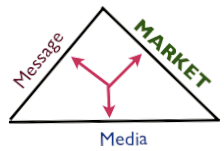 We all know that the ultimate marketing secret weapon for all products whether its consumer based products or enterprise software products, is to make the consumers/buyers/customers understand the Unique Selling Proposition(USP) of a product. But as per the old school of thinking the USP always revolves around 4 Ps which is Product, Price, Place & Positioning. Based on my observation of the consumer products and comparing that to Enterprise software products, continuing the USP marketing strategy on the 4P approach for Enterprise software will not been very effective in the long run and definitely needs a paradigm shift.
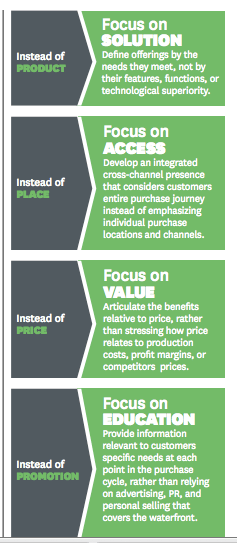
The paradigm shift around marketing Enterprise software should now involve emphasis from Products to Solutions, Place to Access, Price to Value and Positioning to Education. The new school of thought calls it the SAVE approach of Product Marketing (see the latest Harvard Business Review magazine article “Rethinking the 4 P’s”)
Here is what Product Marketing need to do:
- Instead of focusing on defining the product features start to highlight what are the solutions that buyers/customers can build with the product to address their business issues. This would require a good understanding of the buyer’s persona and what their pain points
- Focus on addressing the end to end experience that the buyer/customer will have to get access to the Product instead of focusing only on the packaging and downloading aspects of the product
- Articulate the benefits that the products will offer by solving their business issue and providing a realistic expectation on the ROI instead of focusing on the price and the competitive differentiators alone.
- Invest in resources that will tailor and provide better education of the product to the buyers so the end to end experience of the product from purchase to deployment to maintenance of the Enterprise software is a pleasant experience for the buyer and the customer that you are targeting in specific markets.
Sooner the Product Marketing team adopts the SAVE way of thinking, the better it would be for the overall growth and success of Enterprise software products!!.
Share this:

Technology product gaps for the mobile consumer market
The article in the recent HBR magazine on how How People Really Use Mobile opened up my mind to validate how I use my smart phone on a daily basis. This also made me to look into this topic further to see if I could connect the dots between the mobile consumer behavior and the technology product gaps that I specifically see that we need to pay attention to in the mobile space.
How are consumers using a Mobile Device:
Based on a industry research study called “Seven Shades of Mobile” conducted by InsightsNow for AOL and BBDO, the data show that 68% of consumers’ smartphone use happens at home. For a typical mobile user the common activity is not shopping or socializing but engaging in what researchers at BBDO and AOL are calling it the “me time.”.

Also checkout some additional interesting facts and case studies about brand messaging through mobile apps in this webinar “Seven Shades of Mobile: The Hidden Motivations of Mobile Users
What are the Technology product gaps for the mobile consumer market?.
The mobile growth trend is here to stay. If you want to know how big the mobile market is, take a look at the stats here. Based on the “Me time” data from I mentioned above, it is important that the technology vendors pay attention to the market needs in the following technology space so they can build value added solutions and products to address the market need of the mobile users.
1. App Development Tools
- Mobile consumers will use mobile apps to purchase goods and services, do banking and billing, to do in-store kiosk transactions, support mobile portals, apps for education and training, apps for games and entertainment.
- The app development tools should be simple and flexible so the apps are built once and can be used on multiple mobile devices to support portability and interoperability.
2. Security Tools
- Mobile user’s identity and privacy will have to be safe guarded at all times. So the security tools/solutions should protect user’s identity information as well his data on the mobile device and during transactions over the network.
3. User Management and Metering Tools
- Better management tools will help to encourage mobile users to get comfortable and help improve their confidence to do more business transactions on the device.
- Metering Tools that will help users to track, analyse and monitor their data, transactions and quality of service over a period of time.
4. Advertising and Messaging Tools
- Need better tools to engage and educate mobile users to the brands, value and benefits, accessibility of products and help with personalize data based on consumer’s usage trend and habits.
5. Data Management Tools
- User data could be of several forms like the identity data, application data, their search data, user’s contextual data, etc. This data will grow overtime and needs to be managed effectively so they are backed up and archived timely so no data is lost and can be will be used as a knowledge base for future use.
Time to innovate and be creative!
Share this:

Importance of competitive intelligence as a business strategy
Companies investing time and resources to do a regular analysis of their competitive landscape is a must to stay innovative and to be a visionary market leader.
How does competitive intelligence help?.
Understanding the competitive landscape helps to address these questions for any business. Having the information to these questions will help to make the competitive information more valuable which then can be further analyzed and to make a decisions that can strengthen the overall strategy around business, sales, product and execution.
- How do other vendors think?
- What are their strengths?.
- What are their weaknesses?
- Where are they vulnerable?
- How do they differentiate themselves?
- What is their buyer’s requirements?
Once the competitive data is collected, several folks within the company can leverage it to make effective decisions:
- The leadership management team can leverage this data to drive business decisions
- Sales can use this as a good set of metrics to find new prospects or to up sell to existing customers.
- Product Managers can figure out a plan to address the gaps and weaknesses through product development or through product acquisition
- Marketing can prioritize their marketing budget to better address the market with the right messaging and positioning statements to validate the strengths against other vendors.
How to go about with gathering competitive intelligence?.
1. Do SWOT Analysis: Competitive intelligence professionals often use an analytical technique called SWOT — an acronym for Strengths, Weaknesses, Opportunities, and Threats. The effectiveness of SWOT’s, it can be the starting point for analyzing your position relative to that of your rivals.
2. Study competitors company website, products features, product pricing, product positioning, marketing channels and delivery models to seek their differentiation factors.
Check out additional ideas around these steps from another blog site http://productmanagementtips.com/2011/02/26/competitive-analysis-sources/
3. Talk to the analysts and read through the analyst reports to understand the market trends and the overall market scope.
4. Do regular win/loss analysis to better understand your customer’s and prospect’s buying requirements and needs.
5. Present at trade shows and speaking at conferences can facilitate a way to understand the needs of existing and future customers.
Send me your comments if you have additional ideas to make this exercise a move effective program for any company to adopt.
Share this:

Difference between Enterprise and Consumer software
Having been a Product Manager managing Enterprise software all my work life, I wanted to take a shot at how Enterprise vs Consumer software has evolved in recent times.
Now with the popularity of cloud and software-as-a-service (SaaS) through the gap between the enterprise space is becoming more like the consumer space, there are still differences between “enterprise” versus “consumer” software. Here’s is my take.
1. Market Problem and Buyer Persona:
- Enterprise software address a business problem for user communities that are large groups of people having the need to solve a common business need. In consumer, the software is mainly to address and enhance the needs of a single user.
- The Enterprise software vendors will have to regularly listen and take feedback from the user groups if they need to keep these users happy and loyal to their software product. Hence the Voice of the customers (VoC) is important.
- Consumers take what they’re given. If the user does not like what the software offers then he will pick a software from an other vendor
2. Sales:
- Enterprise software, you sell to organizations. The consumer software, you sell to people. Does high volume sales mostly through retail.
- Enterprise software sales are direct. For consumer software, sales are done mostly through self-service, you can now deliver the product via the web. In enterprise, you deliver a packaged software that can either be hosted in the cloud as SaaS or a managed service that can be hosted onPremise.
- Pricing and packaging needs are very different for Enterprise software than Consumer. For Enterprise software the cost of ownership is a big factor that drives sales. Hence pricing of the software has to be thought through well before the software is released. The pricing for consumer software can be set depending on the buying power of the individual user.
3. Product Requirements:
- Engineering requirements for Enterprise software has special needs. The requirements around hardware, localization, security, scalability, interoperability are factors that need to be taken into consideration early on in the product development cycle. For consumer software the feature sets are controlled and dictated by the vendor instead of the individual user contributing to the required features of the vendor software.
- Enterprise software rely on early adopters in the user community to test and provide feedback on the software before it gets released to the market. The consumer software does not have the luxury of early adopters, hence the software is tested after is out in the market.
Share this:

Art of defining Market Requirements..
Irrespective of whether you are a Product Manager or a Product owner you have a responsibility of translating the Market requirements into product requirements. But how product managers go about gathering and defining the product requirements is an art that product managers needs to excel over time if he/she needs to be seen as result oriented product leader.
To make sure that the requirements add value to the product and not just features, every Product Manager need to follow these steps to be successful.
Step 1. Identify the Market Problems
The best way to have a better view of the market problems, every product manager needs to monitor the pulse of the market. This includes closely watching the market trends, regularly engaging with prospects and do the win/loss analysis, identifying the product issues, understanding your customer pain points with regular feedbacks and regularly analyzing your backlogs.
Step 2: Seek the Market Evidence
Once you have gained the market knowledge from Step 1, talk to the analysts and market experts to see if you there is market evidence to back up the data that was collected earlier. Further validate with data obtained from competitive analysis, technology assessments and through innovative ideas.
Step 3: Define to deliver to the Market
Translate the market evidence from Step 2 into specific functional requirements that are achievable and realistic by your team. Each functional requirement should be measurable and time bound so it can be tracked. Including user scenarios along with benefits and positioning statements will enhance the clarity of the requirement definition.Each functional requirement should also target how it will address other targeted areas like
- Standardization
- Certification
- Installation
- Customization
- Localization
- Documentation
- Education
By following the above three steps can help Product Managers to communicate the requirements better to all the stakeholders thereby you can make sure what you build is what the customers wants and will buy. Hence a win-win for all!!.
Share this:

What makes a Product successful?
Over my years of experience as a Product Manager these are these principle factors that I follow to make a product successful. Remember all these six principles irrespective of the product will have to be fine tuned with your customers in mind:
- Cost: Lower cost of the product will allow deployment and the ownership cost for the customer. The high license cost for the onPremise vendor software is what is driving more and more customers to look at cloud services these days. Being creative with your pricing model will help you to justify the cost.
- Usability: User experience matters not just for external-facing client software but also for overall administration, manageability and deployment use cases. Simplification of the deployment, manageability and administration of the product will facilitate faster evaluation and help to capture more customers in this market.
- Manageability: Provide tools and protocols that enable the deployment, administration, and monitoring through a remote console. This will help to facilitate better user experience at the same time reduce support and maintenance cost for the customer.
- Flexibility: Making sure that the product can provide flexibility for the customer when a future need to extend the business needs will encourage the customers to adopt the product faster. The flexibility then will become a value add that will help strengthen the overall portfolio for the product.
- Integration: Providing the ability for the product to coexist with other vendor products should always be the focus. This would mean you provide enough hooks within the product through APIs and an SDK. This can help to integrate the product with other software vendors thereby address any unique business case that the customer may have
- Market Leadership: Strive for market leadership. This would require that you clearly understand the market trends and the competitive landscape. Build differentiators that will help to position the product based on the value add it can offer. Its comes back to the creativity and Inovation of the whole team working on the product.
Share this:

Why startups need Product Managers?
I am noticing more and more startups emerge with a great business plan and get funded to start building products that they think can help meet a market need. What is appalling to me is that while the product is the key thing that will make or break the company, they completely ignore the one role that can really help them accelerate and deliver a better market, the role of a good product manager. Initially, these companies may not feel the impact of this decision, but over time, as product starts materializing, and users/customers start showing up, this becomes a costly mistake. By the time they realize what an impact a product manager would have made in the early stages of the Product Life cycle, its often too late.
It is important to identify early on what is the role of a Product Manager in a startup.
A product manager can bring a lot of value to the product definition and focus, both through the inbound and out bound activities.
Some of the key inbound activities are:
- Product requirement scoping and setting clear priorities with the development team as to what are the value add features that will drive revenue and customer acceptance. If the engineers know why they are building what they are building, they will be much happier and produce a far more superior product.
- Clearly identifying and understanding the competitive market space and defining the market-scope for the product. When the engineers know what they are asked to compete against, they will often excel and beat the competition. If sales team can articulate this, then this results in better sales!
- Make sure all the skate holders (sales, support, engineering, professional services, marketing, and executive sponsors) understand the market well enough about what market need and pain points the product aims to address.
On the other hand, outbound activities are important too, such as:
- Identify and build relationship with the the early adopters and that would be willing to participate early on at the Beta testing and provide timely feedback. This enables you to deliver a better product to the market.
- Make sure the sales teams are trained and are confident to pitch the products to the market. If they don’t understand what they are selling and who they are selling to, you won’t get the sales numbers you need.
- Build a strong relationship with customers and partners to make sure the value add of the product is well understood before they start adopting the product. This yields a happier customer who does not get frustrated with a misunderstood product.
- Work with the marketing team to fine tune and update the messaging and positioning of the product to create buzz and awareness of the product in the industry. Leverage social media to spread the word out, and don’t forget talking to the analysts, they need to know how cool your stuff is so they can tell their clients.
So, if you are a startup or working in one, make sure you understand the importance of a product manager who can be the passionate evangelist of the product and technology you are building. Behind every successful product, is a successful product manager! 🙂

